Rainy-Season Home Hygiene: Managing Damp and Frequently Used Areas
Key Takeaway
- Rainy season home hygiene in Malaysia goes beyond a regular clean. Persistent humidity changes which areas of the home dry out slowly and need more frequent attention.
- The entryway, bathroom, laundry area, and kitchen are typically where wet weather creates the most noticeable change in daily hygiene.
- Visible dirt and mud should always be removed before applying any disinfectant. Disinfectants work on clean surfaces, not on surfaces still covered in grime.
- Good ventilation is the first step in managing indoor dampness. Opening windows when rain pauses, using fans to move air, and keeping interior doors open all help reduce moisture build-up.
- GERMISEP Tablets offer a straightforward way to prepare a measured disinfectant solution for hard, non-porous surfaces as part of a regular wet-season cleaning routine.
Introduction
Malaysia’s rainy season brings more than wet roads and grey skies. Sustained rainfall and higher humidity make everyday surfaces harder to keep consistently clean. Floors stay wet longer after use. Entryways get muddy quickly. Bathrooms take more time to dry out between showers.
None of this turns into a serious problem after a single rainy day. But when wet conditions persist over weeks, surfaces that dry out quickly in dry weather can stay damp for longer. When you keep an eye on where moisture is building up and adjust your cleaning routine for those areas, the rainy season becomes much more manageable.
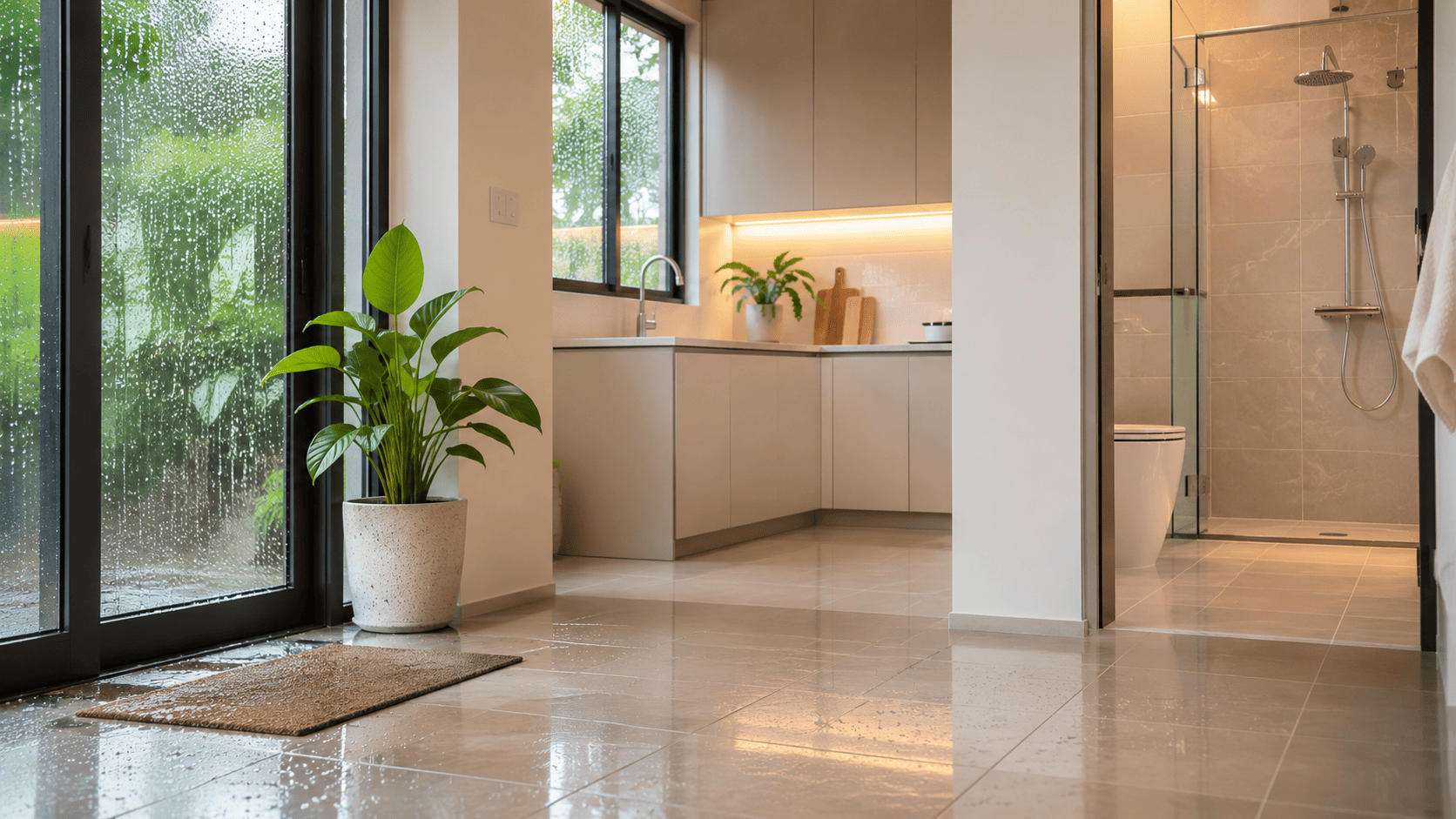
How Does Rainy Season Affect Home Hygiene in Malaysia?
Malaysia has two monsoon seasons: the Northeast Monsoon from November to March and the Southwest Monsoon from May to September, though patterns can vary each year. Outside those peak periods, localised rain and elevated humidity are common across the country.
The bigger home hygiene challenge during Malaysia’s rainy season is not the residue. Higher indoor humidity slows how quickly surfaces dry between uses. A peer-reviewed study on buildings in Malaysia notes that the country’s high humidity and frequent rainfall create conditions particularly conducive to microbial growth indoors.
The areas that are the ones that already deal with water and moisture as part of daily use: bathrooms, kitchens, entryways, and laundry areas.
Managing home hygiene in wet weather starts with managing moisture, not just reaching for a disinfectant. Disinfection works best on clean surfaces, not on areas still wet from rain or recent use.
Why Ventilation and Dirt Removal Come Before Disinfecting
Before you reach for any cleaning product, two steps matter more for home hygiene during Malaysia’s rainy season: improving ventilation and removing visible dirt first.
Good ventilation reduces the moisture that lingers indoors after rain. WHO guidelines on indoor air quality note that controlling temperatures and ventilation is the key to avoiding excess humidity and condensation on surfaces. In practice, this means opening windows whenever rain pauses and using ceiling or stand fans to move air through damp-prone rooms. Keeping interior doors open helps air circulate between spaces too.
Removing visible dirt before disinfecting is not optional, because disinfectants are designed to work on clean surfaces. A disinfectant solution applied to a muddy floor or a tile covered in soap residue cannot make full contact with the surface beneath. The visible layer physically blocks the active ingredient from reaching the surface. Clean the surface first with soap and water or a damp cloth, then apply the disinfectant solution and allow it to sit for the contact time in the product instructions.
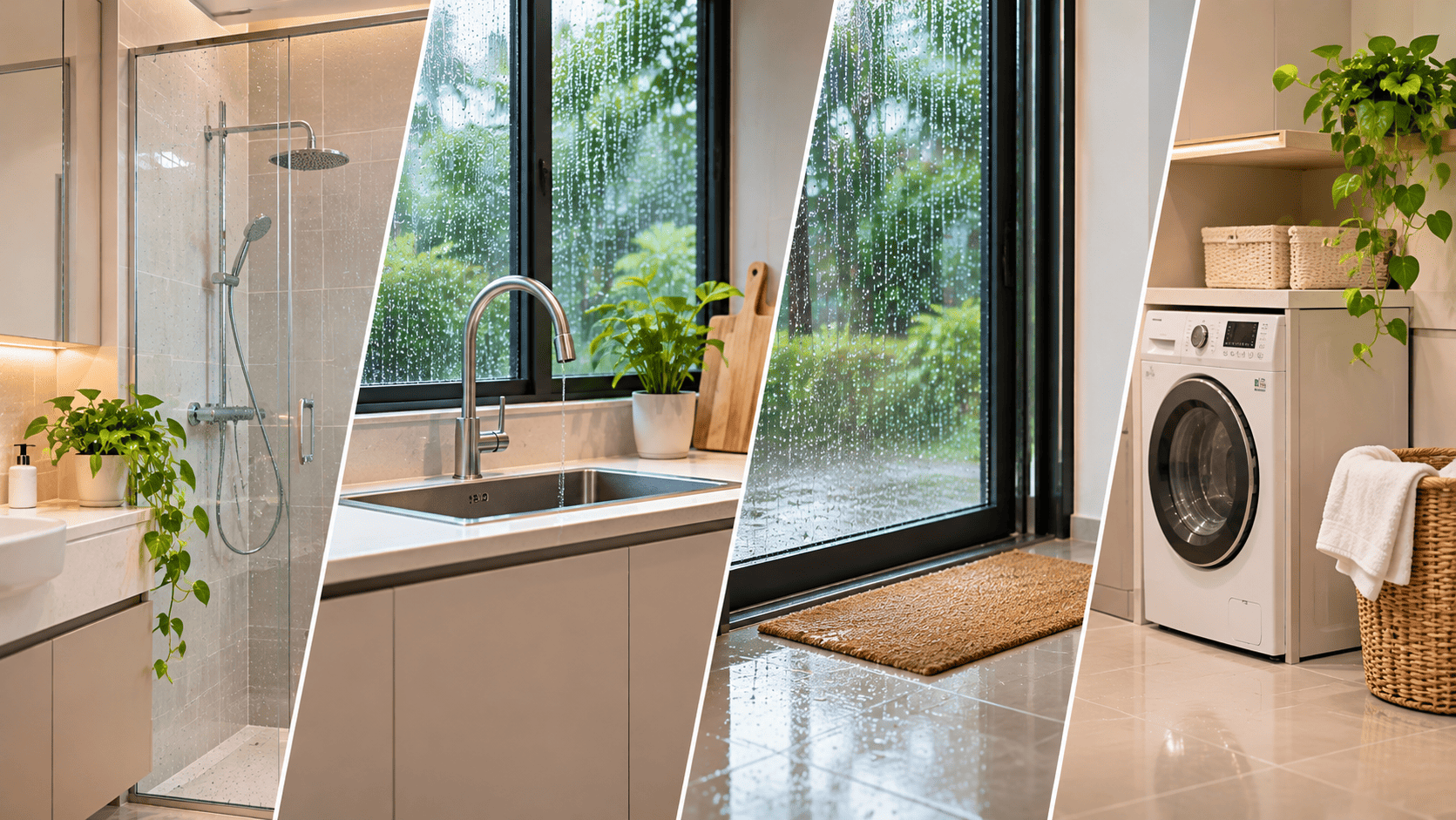
Which Areas of the Home Need More Attention During Wet Weather?
When outdoor humidity stays high for days at a time, four areas of your home need closer attention than usual: the entryway, bathroom, laundry space, and the kitchen sink area.
The Entryway and Shoe Area
The entryway serves as the bridge between the external environment and your own home, and during the rainy season that boundary gets blurry. Wet shoes track in mud, water, and whatever has collected on pavements and flooded walkways. Wet umbrellas drip on floors. Bags set near the door pick up whatever is on the ground and carry it further inside.
For your entryway, physical cleaning comes first. Wipe down floors that have been tracked on, and keep a dedicated mat or tray near the door for wet umbrellas and footwear. Removing shoes before going further into the home also helps stop outside contaminants from spreading.
Once the area is visibly clean and any standing water is gone, apply a prepared disinfectant solution to the floor surface. Dissolve one GERMISEP Tablet in 2 litres of water and apply with a mop or cloth. Let it air-dry. This gives the active chlorine compound time to work on the surface rather than being removed before the contact time is complete.
The Bathroom During High-Humidity Months
Your bathroom is already the dampest room in the home. During wet weather, outdoor humidity compounds what happens indoors. Tiles stay wet longer after a shower and grout stays damp between uses. The overall drying time stretches out compared with drier months.
Bathroom hygiene during wetter months calls for more regular attention to the floor, shower area, and basin. The same sequence applies: clear away soap residue first, then apply the disinfectant solution to hard surfaces.
For bathroom floors and the shower area, the prepared GERMISEP Tablet solution is appropriate for tiles, grout, and other hard surfaces. Apply it, allow it to sit for the contact time in the product instructions, then rinse and let the area dry with the door open or a fan running.
Drying surfaces faster after use by leaving the door open and running a fan helps prevent dampness from building up between uses.
The Kitchen Sink and Counter Perimeter
The area around your kitchen sink can stay damp during regular use. Rainy season does not change this dramatically, but it does change how quickly the surrounding air circulates. Counters that dry in minutes on a dry day may stay slightly damp for longer when outdoor humidity is high.
In your kitchen, follow the same sequence: clear away food residue, grease, or any visible dirt before applying any disinfectant. A prepared GERMISEP Tablet solution works well on your kitchen counter, the sink basin, and the area around the drain. Follow the product instructions for the correct dilution and contact time.
The Laundry and Utility Area
Laundry areas have a specific wet-season challenge. When clothes dry indoors, they release water vapour into the room, raising humidity in a space already dealing with damp conditions.
Ventilation is the priority here. If you can, dry laundry in a room with a window open or a fan running. If you are using an enclosed room, leave it ajar to let moisture escape.
For the floor, the washing machine exterior, and any shelving that stays damp, clear away lint or dirt first, then apply the prepared solution to hard surfaces.
How to Use GERMISEP Tablets as Part of a Rainy-Season Routine
GERMISEP Tablets are a practical choice for rainy-season home hygiene in Malaysia. As a household disinfectant for Malaysian homes, one tablet dissolved in 2 litres of water produces a chlorine-based solution suited to hard, non-porous surfaces.
| Step | What to do |
| Prepare | Dissolve one tablet in 2 litres of clean water. Use within 24 hours. |
| Clean first | Remove visible dirt, mud, grease, or soap residue before applying. |
| Apply and wait | Apply the solution. Allow it to sit for the contact time stated on the product. |
| Use on right surfaces | Hard, non-porous surfaces only: tiles, floors, sinks, basins. Check before using on coloured fabrics. |
| Store correctly | Cool, dry location away from sunlight and moisture. Not in a shower room. |
Frequently Asked Questions
1. What makes rainy season home hygiene in Malaysia different from a regular cleaning routine?
During prolonged wet weather, indoor humidity stays higher than usual, which means surfaces that dry out quickly in dry weather can stay damp for longer. That extended damp period changes which areas of the home need more frequent attention, particularly the bathroom, entryway, and laundry space. The approach to using a household disinfectant in Malaysia stays the same. The main adjustment is checking those damp-prone areas more often.
2. Should I apply disinfectant to muddy or wet surfaces directly?
No. Disinfectants are designed to work on clean surfaces. Applying a solution to a surface still covered in mud, soap scum, or food residue means the active ingredient cannot make full contact with the surface beneath. Remove visible dirt with soap and water or a damp cloth first, then apply the disinfectant solution and allow it to air-dry for the recommended contact time.
3. How do I prepare a GERMISEP Tablet solution for home use?
Dissolve one GERMISEP Tablet in 2 litres of clean water. Stir or allow the tablet to fully dissolve before applying. Use the solution within 24 hours. After that, prepare a fresh batch for the next cleaning session.
4. Can GERMISEP Tablets be used for bathroom hygiene during the rainy season?
Yes. A solution prepared from GERMISEP Tablets is suitable for hard, non-porous bathroom surfaces including tiles, floors, the shower area, and the sink basin. Remove visible soap scum or dirt first, then apply the solution and allow it to sit for the contact time in the product instructions before rinsing.
Rainy season home hygiene in Malaysia does not have to mean a harder time keeping your home clean. The areas that need more attention, such as the entryway, bathroom, laundry space, and kitchen, are manageable when you know what changes with wet weather and what stays the same. Ventilate when you can, remove visible dirt before disinfecting, and use a freshly prepared GERMISEP Tablet solution on hard surfaces in the areas that stay damp longest. For the full GERMISEP range, including tablets and wipes, view the GERMISEP Tablets product page.