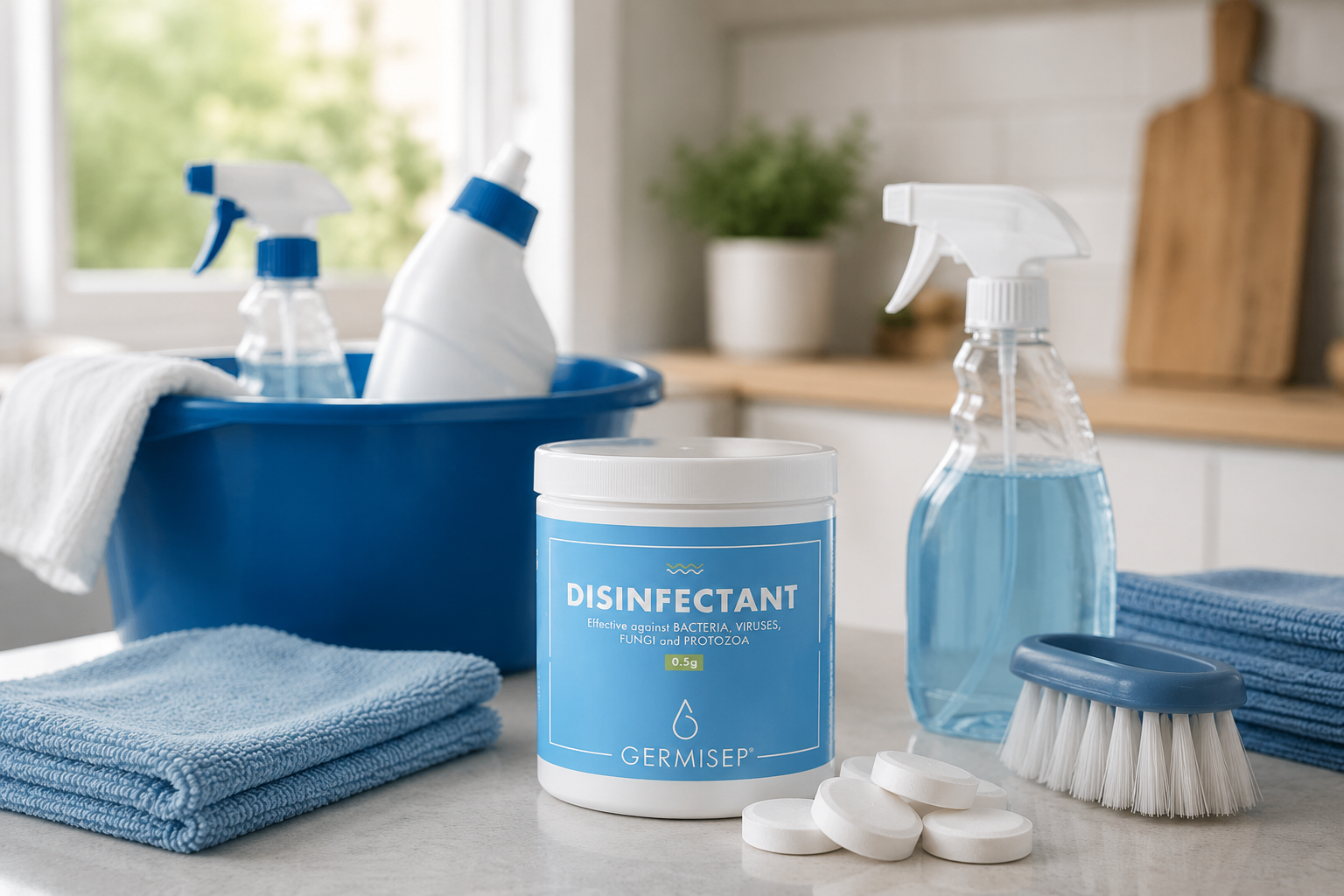
How to Incorporate GERMISEP Tablets Into Your Home Cleaning Routine
Key Takeaway
- Disinfectant tablets like GERMISEP dissolve in water to release hypochlorous acid (HOCl), an active disinfecting agent that kills up to 99.9% of bacteria, viruses, and other microbes.
- Each room in your home has different hygiene demands. Bathrooms need pathogen control. High-touch surfaces like door handles need regular, consistent attention.
- A single GERMISEP tablet dissolved in water gives you a hospital-grade solution you can use on multiple surfaces without harsh fumes or the need for gloves.
- Disinfectant cleaning works best when you clean surfaces first with soap and water, then apply the tablet solution. Skipping this step reduces disinfection effectiveness.
- GERMISEP sterilising tablets are halal-certified, skin-friendly, and safe around children, pets, and the elderly. You get clinical efficacy without clinical handling requirements.
Introduction
Most people think of disinfecting as something you do when someone gets sick. A child comes home with a cold, and suddenly you’re wiping everything down. The floors get mopped. The door handles get sprayed. Then life returns to normal, and the routine disappears.
The problem with that approach is that the surfaces in your home aren’t only dangerous when illness is visible. High-contact zones like kitchen countertops, toilet seats, and bathroom taps carry bacteria and viruses every day. The GERMISEP disinfectant tablets are designed for routine use, not just reactive cleanups. They make hospital-grade disinfection accessible at home without complicated preparation or strong chemical fumes.
This guide walks you through building a practical disinfectant cleaning routine using GERMISEP tablets, room by room. It covers which surfaces need the most attention, how to prepare the solution correctly, and how to fit proper disinfection into a daily schedule without adding much time.
What Are Disinfectant Tablets?
Disinfectant tablets are solid, water-soluble tablets made from Sodium Dichloroisocyanurate (NaDCC). When you drop one into water, it dissolves and releases hypochlorous acid (HOCl). This is the active disinfecting agent. HOCl breaks through the protein walls and enzyme systems of bacteria, viruses, and fungi, destroying them at a cellular level.
GERMISEP sterilising tablets use this same NaDCC formulation. They’re the same class of disinfectant used in hospitals, food processing facilities, and public health emergency response programmes. The World Health Organisation recognises NaDCC as a safe and effective source of free available chlorine for disinfecting domestic surfaces. Unlike liquid bleach, the tablet format keeps the concentration stable, so you get consistent results every time.
Why a Room-by-Room Approach Works Better
Generic cleaning advice treats every room the same. It doesn’t. Your kitchen has different contamination risks than your bathroom. Your child’s play area has different priorities than your living room floor. Applying one flat disinfectant cleaning routine to every surface in the house often means over-cleaning low-risk areas and under-cleaning the ones that actually matter.
A room-by-room approach gives your disinfection routine a clear structure. It helps you identify where your household is most exposed, how frequently each zone needs attention, and where the GERMISEP tablet solution fits alongside your regular cleaning products. Think of it less as a chore list and more as a hygiene map for your home.
This approach also makes it easier to maintain the routine long-term. When you know exactly which surfaces in which room need attention, you’re not making decisions every time you clean. The habit becomes predictable. Predictable habits get done consistently, which is where the real hygiene benefit comes from.
“Disinfection isn’t about making surfaces look clean. It’s about reducing the microbial load on the surfaces your family touches most. The two goals don’t always overlap.”
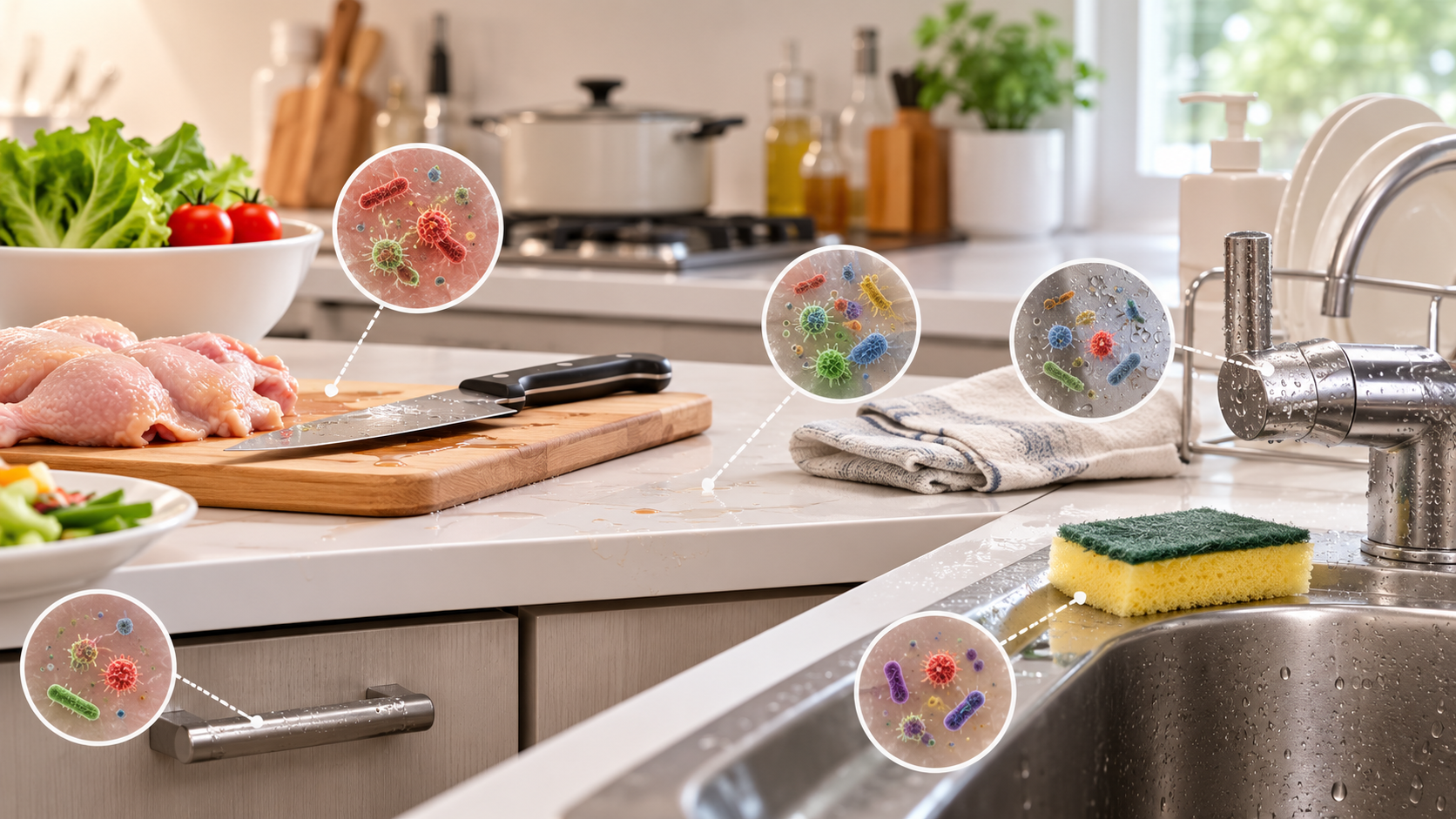
The Kitchen: Food Safety Comes First
The kitchen combines two types of contamination risk that don’t belong together: raw food preparation and frequent hand contact. Countertops, chopping boards, sink basins, and tap handles are all high-risk zones in a space where hygiene directly affects what your family eats.
For kitchen disinfectant cleaning, dissolve one GERMISEP tablet in two litres of water. Wipe down countertops, the sink basin, and tap handles with this solution after your regular cleaning. GERMISEP’s HOCl formula is safe, non-irritant on skin, and does not require rinsing after application on non-food-contact surfaces.
A key rule for any disinfectant cleaning product is to clean before you disinfect. Soap and water remove the visible organic matter first. The tablet solution then works on the microbial layer that soap alone doesn’t eliminate. The CDC recommends cleaning surfaces with soap and water before applying any disinfectant, noting that impurities like dirt make it harder for disinfecting agents to reach and kill germs. Doing it in reverse order reduces how effective the disinfection step actually is.
The Bathroom: Controlling High Pathogen Zones
Bathrooms are the highest-risk rooms in most homes. Toilet seats, flush handles, basin taps, and door handles all carry a heavy microbial load from regular daily use. A standard bathroom wipe-down with a general cleaner keeps things looking tidy. It doesn’t disinfect.
GERMISEP tablets are well-suited to bathroom disinfection because the solution works without requiring strong chemical fumes or protective gloves. To learn more about the specific application process for toilets, this guide on how to disinfect your toilet with GERMISEP covers the step-by-step process in detail.
For a daily bathroom routine, prepare the tablet solution and apply it to the toilet seat, flush handle, basin tap, and door handle. Let it sit without rinsing. Replace the solution every 24 hours. The NaDCC compound maintains its disinfecting activity throughout that window, but loses efficacy past that point.
“NaDCC remains active in the presence of organic matter because it releases HOCl gradually, maintaining sufficient free chlorine concentration as it works through contamination.”
Living Areas and High-Touch Surfaces
Not every part of your home needs daily disinfection. Living room floors, sofas, and shelving don’t accumulate the same pathogen load as bathroom fixtures or kitchen counters. What they do accumulate is contact. Remote controls, light switches, door handles, and stair railings are touched dozens of times a day by multiple people.
These surfaces are where viral transmission often happens silently. A household member returns home carrying an airborne illness. They touch the front door handle, the light switch, and the TV remote before anyone realises they’re unwell. By the time symptoms are visible, the surfaces have already done their work.
For high-touch surface disinfecting, use the prepared GERMISEP tablet solution on a clean cloth and wipe these points down two to three times a week. You don’t need a full cleaning pass each time. A targeted approach to door handles, switches, and shared electronics takes under five minutes and reduces transmission risk significantly. For a quick pass in between, GERMISEP cleaning wipes work well on remotes, switches and shared electronics.
Children’s Areas and Toy Hygiene
Children spend more time with surfaces than adults do. They sit on the floor, put objects in their mouths, and touch shared items constantly. This makes their play areas a distinct disinfection priority in any home cleaning routine.
GERMISEP sterilising tablets are safe for use in children’s spaces. The NaDCC-based solution is hypoallergenic and does not leave a harsh residue on surfaces. For hard plastic toys, wipe them down with the prepared solution and allow them to air dry. For high-contact floor areas where young children play, mop with the tablet solution after your regular floor cleaning.
If you’re unsure about whether to use disinfectant cleaning products or wipes for different household tasks, that distinction is worth understanding before building your routine. Wipes suit on-the-go and quick spot cleaning. The tablet solution suits broader surface coverage and soaking applications.
Shared items like high chairs, feeding trays, and step stools are easy to overlook in a children’s hygiene routine. These surfaces contact food, hands, and mouths in rapid succession during a single mealtime. A weekly wipe-down with the GERMISEP solution on these items adds very little time and closes a hygiene gap that standard kitchen cleaning doesn’t address.
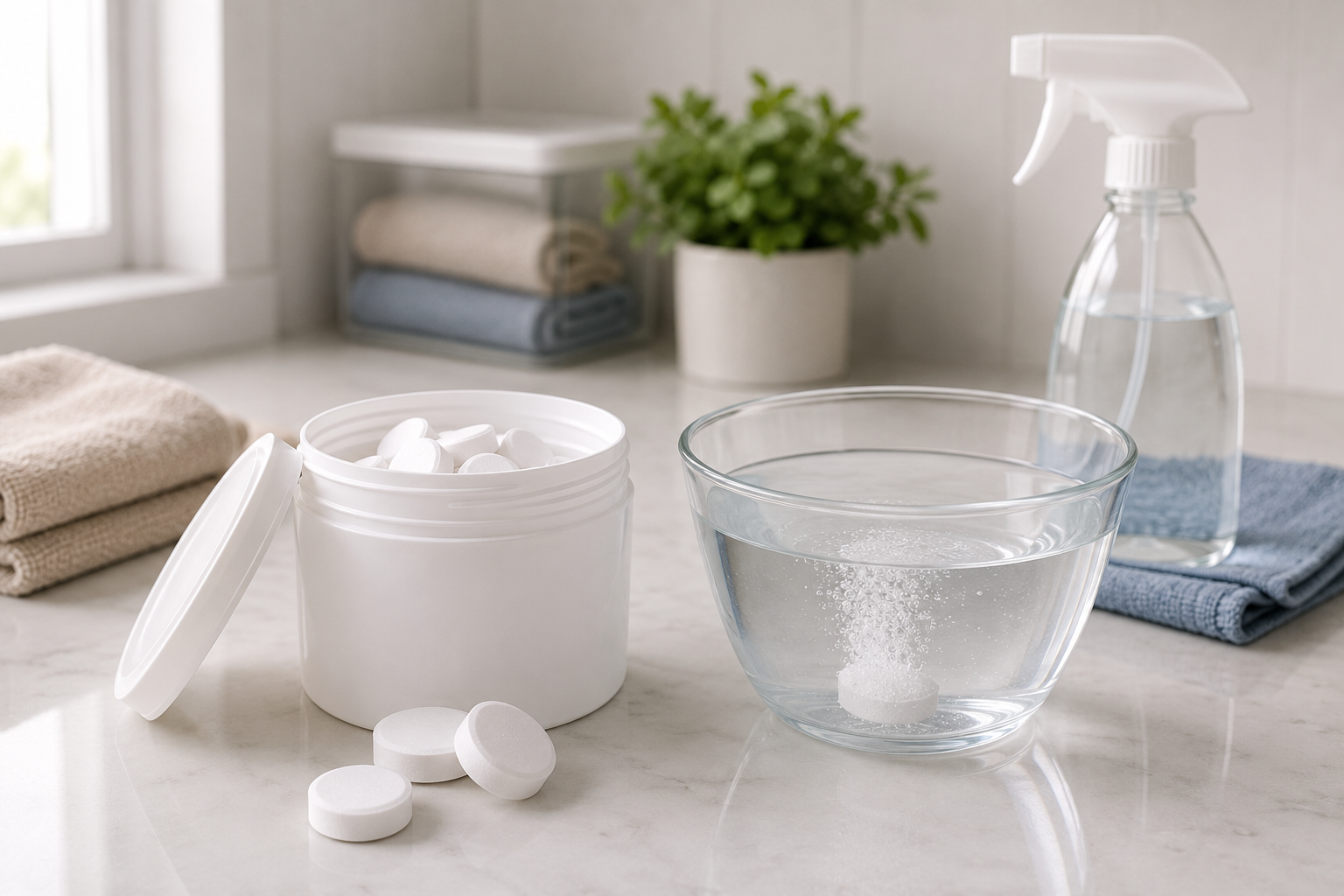
Storing and Preparing Tablets Correctly
How you store and prepare your GERMISEP tablets matters as much as how you use them. NaDCC is a stable compound in dry tablet form. It keeps its potency for two to five years when stored in a cool, dry place away from direct sunlight and moisture. Do not store tablets in the bathroom where humidity is consistently high, as this can affect the tablet’s shelf stability over time.
When preparing the solution, use clean tap water at room temperature. Hot water can affect the release of HOCl and alter the concentration. One tablet per two litres is the standard dilution There is also a 2.5g tablet made for 10 litres; the 0.5g vs 2.5g guide explains which suits which job. for general home surface disinfection. For higher-risk applications like soaking cloths or disinfecting buckets and mop heads, check the GERMISEP dosage calculator for the right concentration.
Prepare only the volume you need for each cleaning session. The prepared solution remains effective for 24 hours. After that, the free chlorine dissipates and the solution loses its disinfecting strength. Discard unused solution after 24 hours and prepare a fresh batch for the next session. Do not top up an old solution by adding a new tablet to the remaining liquid from the previous day.
Understanding why chlorine works as a disinfectant also helps you get more from the tablet solution. The chemistry behind why chlorine is used in disinfectants is worth reading if you want a deeper explanation of how HOCl acts against microbial cell walls.
How Often Should You Disinfect?
Frequency depends on the zone. Not every surface in your home needs the same schedule. A simple way to think about it:
Daily: Toilet seat and flush handle, kitchen sink, kitchen tap. These surfaces carry the highest pathogen density and are used by every household member multiple times a day.
Every two to three days: Door handles, light switches, remote controls, stair railings. High-touch but lower contamination accumulation than food and sanitation zones.
Weekly: Bathroom basin and tap, children’s hard toys, kitchen counters not used for food prep. These areas build up contamination more slowly but still warrant regular attention.
During illness in the household, increase all frequencies by one step. Daily zones become twice daily. Two-to-three-day zones become daily. This is where having disinfectant cleaning products on hand saves time. You’re not making a special trip for supplies. The tablets are already in the cabinet.
Are Disinfectant Tablets Right for Your Cleaning Routine?
Yes. If your household relies on standard cleaning sprays and surface wipes without a dedicated disinfection step, GERMISEP tablets fill that gap directly. They produce a hospital-grade disinfectant solution from tap water, require no gloves or protective equipment, and are safe around children, pets, and the elderly. The tablet format gives you consistent concentration every time and stores stably for years without degradation, making it a practical addition to any home cleaning kit.
Frequently Asked Questions
1. How do I prepare a GERMISEP tablet solution at home?
Drop one GERMISEP tablet into two litres of clean tap water. Wait for the tablet to fully dissolve before using the solution. The prepared solution should be used within 24 hours.
2. Do I need to rinse surfaces after applying the disinfectant tablet solution?
No. Rinsing after applying the GERMISEP solution reintroduces contamination and reduces the disinfection benefit. The solution dries without leaving a harmful residue.
- Are GERMISEP sterilising tablets safe to use around children and pets?
Yes. GERMISEP sterilising tablets are hypoallergenic and formulated without harsh chemical fumes. They’re pH-neutral, which means no gloves are needed during application. The solution is safe for use on surfaces in children’s play areas and pet-accessible spaces.
4. Can I use the disinfectant tablets solution in a spray bottle?
Yes. Prepare the tablet solution in water first, then pour it into a clean spray bottle for surface application. Do not mix the tablet directly in the spray bottle. Make sure the bottle is clean before filling it with the prepared solution to avoid contaminating the mixture.
5. What is the difference between cleaning and disinfecting?
Cleaning removes visible dirt and organic matter from a surface using soap and water. Disinfecting kills or inactivates the bacteria and viruses on that surface using a chemical agent like NaDCC. Both steps are necessary. Cleaning first, then disinfecting, gives you a genuinely hygienic surface. Disinfecting alone on a visibly dirty surface reduces efficacy.
A consistent home cleaning routine needs both cleaning and disinfecting steps. Most households do one without the other. GERMISEP tablets make it straightforward to add hospital-grade disinfection to your existing routine without buying additional products for each room. One tablet, two litres of water, and a clean cloth cover most of your home’s high-risk surfaces.
Start with your kitchen and bathroom. Add your high-touch surfaces over the first week. By the second week, the routine runs in parallel with your regular cleaning without adding significant time. For a full overview of GERMISEP products suited to home use, visit the GERMISEP products page to find the right format for your household’s needs.