Tap Water to Disinfectant: The Quiet Convenience of GERMISEP Tablets
Key Takeaway
- Disinfectant tablets for water, like GERMISEP, work by dissolving NaDCC in tap water to produce hypochlorous acid, the same active disinfecting agent used in hospital-grade cleaning programmes.
- Chlorine tablets in tablet form are more stable, portable, and precisely dosed than liquid bleach, making them better suited to consistent home and workplace disinfection.
- One GERMISEP tablet dissolved in water produces a chlorine disinfectant solution that eliminates up to 99.9% of bacteria, viruses, and fungi on contact.
- The 24-hour solution window is not a limitation. It’s a built-in safety feature that ensures the free chlorine concentration stays within the effective range every time you clean.
- GERMISEP sanitiser tablets are halal-certified, skin-safe, and suitable for households with children, pets, and the elderly, with no protective gloves required during application.
Introduction
Most households keep bleach under the sink. It works, but it comes with trade-offs: inconsistent concentration from bottle to bottle, a sharp chemical odour, skin irritation on contact, and a tendency to degrade faster once opened. Many people dilute it by guessing.
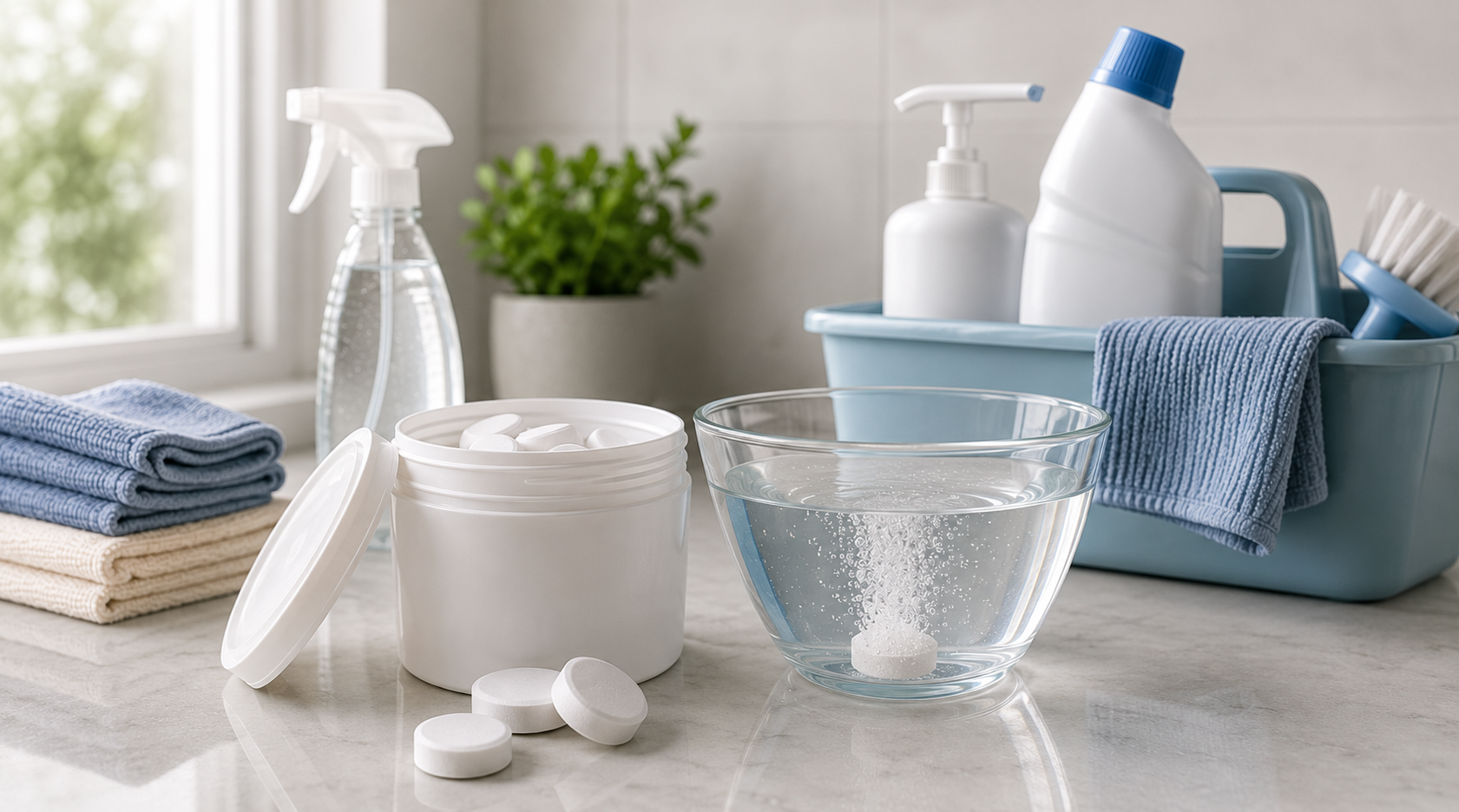
Disinfectant tablets for water solve that problem through a different mechanism entirely. Drop a GERMISEP tablet into tap water, and the chemistry does the rest. The tablet dissolves, releases a measured dose of hypochlorous acid, and produces a hospital-grade chlorine disinfectant from ordinary tap water in under two minutes. No measuring. No guesswork. The same effective concentration every time.
This blog explains how that process works, where it matters most, and why the tablet format is genuinely more convenient than the liquid alternatives most people default to without thinking about it.
What Are Disinfectant Tablets For Water?
Disinfectant tablets for water are solid, effervescent tablets made from Sodium Dichloroisocyanurate (NaDCC), a stable, dry form of chlorine. When a tablet dissolves in water, it releases hypochlorous acid (HOCl), a powerful oxidising agent that destroys bacteria, viruses, and fungi by breaking down their cell walls and enzyme systems. Unlike liquid sodium hypochlorite (common bleach), NaDCC is bound with cyanuric acid in dry form, which keeps the compound stable during storage and releases free chlorine at a consistent rate upon dissolving. The result is a reliable, measurable chlorine disinfectant that produces the same concentration every time, without degradation from light, heat, or air exposure in the way liquid bleach degrades in an open container.
Why Tap Water Is the Right Base
The convenience angle of GERMISEP tablets is not just about ease of use. Using tap water as the solvent is a deliberate design choice with practical advantages that matter in a real cleaning context.
Tap water is universally available. You don’t need distilled water, treated water, or any special preparation. Standard Malaysian tap water, which meets the Ministry of Health’s water quality standards, is the correct base for dissolving a GERMISEP tablet. The NaDCC compound in the tablet is not sensitive to the mineral content of normal domestic tap water at the concentrations used in home disinfection.
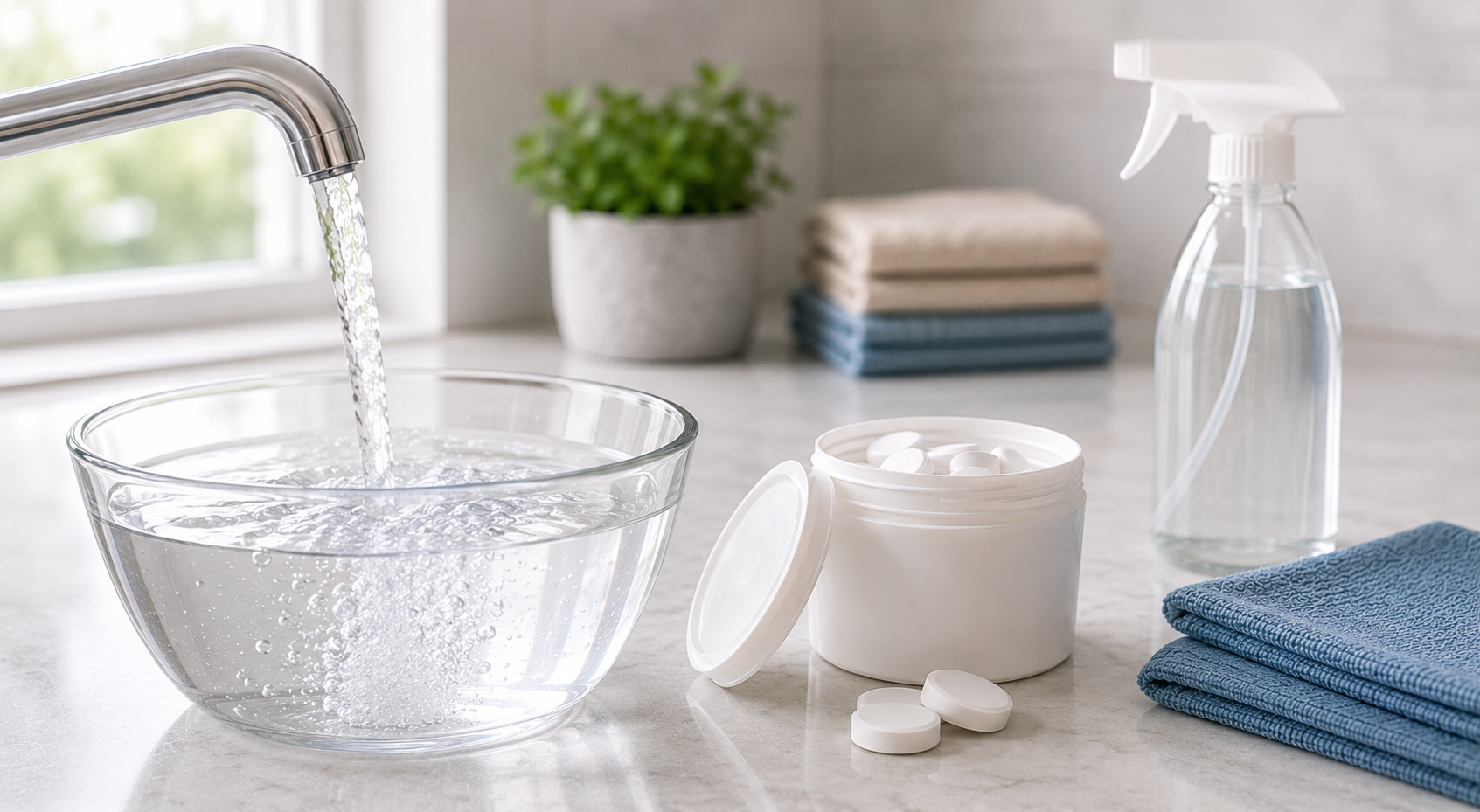
Using tap water also means the dissolved solution can be prepared in any vessel: a bucket, a spray bottle, a bowl, a mop bucket. The preparation method adapts to whatever application format you’re already using. Spray it, wipe it, soak a cloth in it, or use it to mop the floor. The solution works across all of those formats without any reformulation.
This versatility also matters for multi-person households. A parent can prepare the solution in the morning for kitchen use. The same tablet format produces a bathroom solution in a separate container at the same time. Two zones, two vessels, two minutes of preparation, one product type. That’s the practical value of a water-based tablet format: it scales to the complexity of your home without adding complexity to your routine.
“The tablet format removes the two biggest barriers to consistent home disinfection: measuring errors and storage degradation. One tablet, two litres, once per day, and the concentration is always right.”
How NaDCC Compares to Liquid Bleach
Most people reach for liquid bleach because it’s familiar. That familiarity comes with problems that most households don’t think about until something goes wrong.
Liquid bleach begins degrading from the moment it’s manufactured. According to chemistry experts, sodium hypochlorite loses around 20% of its available chlorine per year under normal storage conditions, and faster when exposed to heat or light. A bottle stored under a sink in a warm Malaysian kitchen may be significantly weaker than its label suggests by the time it’s used. You have no way of knowing.
NaDCC in tablet form doesn’t have this problem. The dry compound is stable for up to five years in a cool, dry location. Each tablet contains a fixed, verified dose of available chlorine. When you dissolve it in water, the concentration is exactly what it’s supposed to be, regardless of how long the tablets have been stored.
Liquid bleach also carries a higher pH than NaDCC-based solutions. The more alkaline a chlorine solution, the more of the free chlorine exists as hypochlorite ion rather than hypochlorous acid. Research shows HOCl is between 80 and 120 times more effective as a disinfectant than the hypochlorite ion at the same concentration. NaDCC solutions operate at a lower pH, which means a higher proportion of the available chlorine is in the active HOCl form. The science behind NaDCC as a chlorine disinfectant explains this mechanism in plain terms.
“At equivalent concentrations, NaDCC-based chlorine disinfectant produces more active HOCl than sodium hypochlorite because it operates at a lower solution pH. The disinfecting work gets done faster and with less compound required.”
The Stability Advantage: Storing Chlorine Tablets the Right Way
One of the practical reasons chlorine tablets outperform liquid bleach in a household context is storage behaviour. A bottle of bleach that’s been open for three months and stored near a hot water heater is not the same product you bought. NaDCC tablets stored in a closed container in a dry cupboard are.
GERMISEP sanitizer tablets should be stored away from moisture, direct sunlight, and heat. Do not store them in the bathroom where ambient humidity is consistently high, as this can initiate premature dissolution. The container should stay sealed between uses. Under those conditions, the tablets retain full potency for years, making them suitable as part of a household emergency kit as well as a daily cleaning supply.
The WHO’s guidelines on NaDCC for drinking water disinfection recognise NaDCC as an established source of free available chlorine for water treatment, specifically noting its stability advantages over liquid chlorine sources. This is the same compound, in the same tablet format, that emergency relief organisations deploy in disaster zones where supply chains and storage conditions are unreliable.
The 24-Hour Rule and Why It Exists
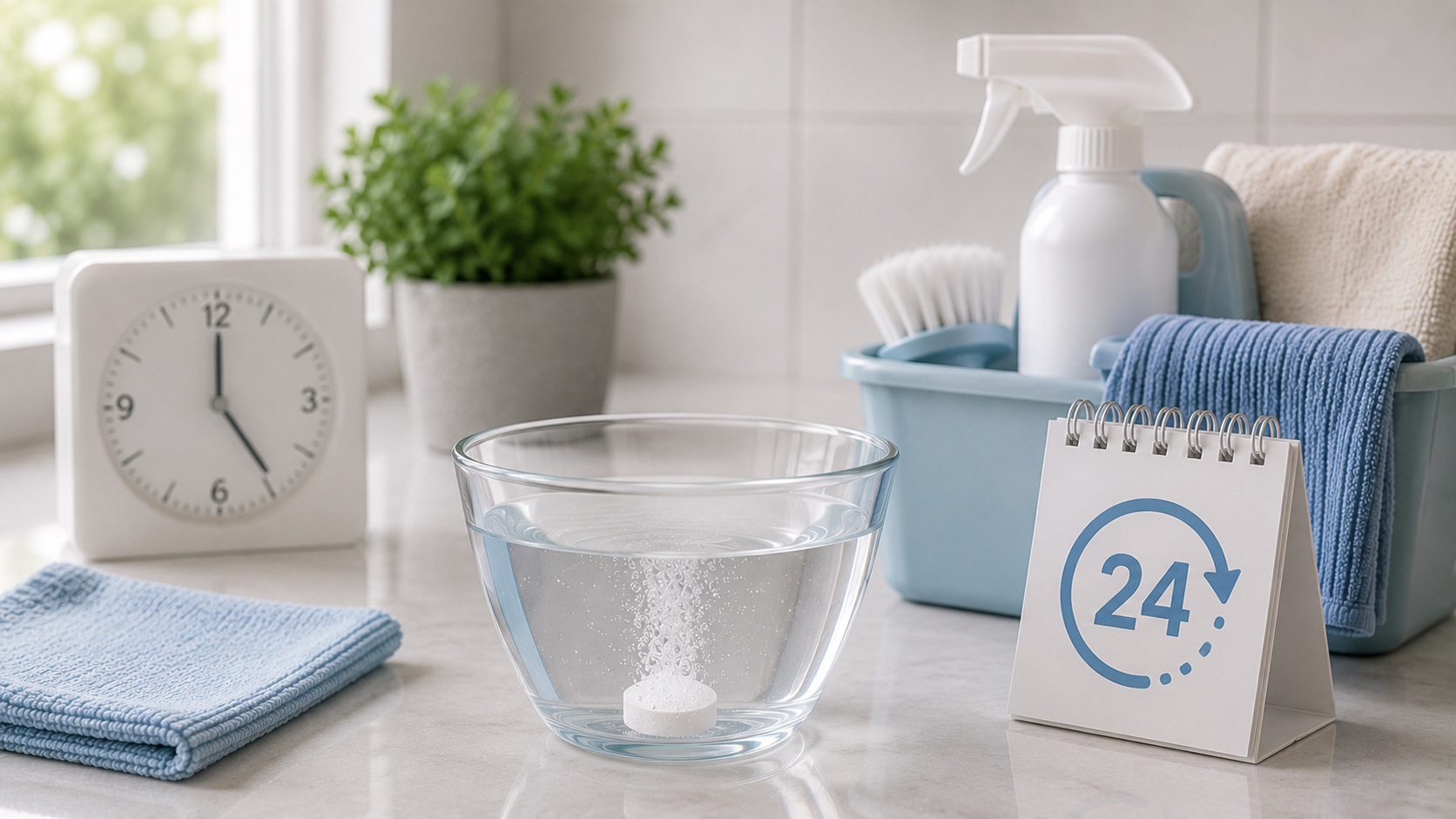
Every set of GERMISEP instructions specifies that the prepared solution should be replaced every 24 hours. Some users interpret this as an inconvenience. It is the opposite. It’s what makes the product consistently effective.
Once a NaDCC tablet dissolves in water, the free chlorine begins reacting with organic matter in the environment. This is what disinfection is: the HOCl consumes itself as it works. Over 24 hours in a home environment, the residual free chlorine concentration drops below the threshold required for reliable disinfection. Using a solution that is two or three days old is using a weakened product. You’re going through the motions without the microbial kill.
Replacing the solution daily takes 30 seconds. You discard the old liquid, fill the vessel with fresh tap water, drop in a new tablet, and wait two minutes. The result is a consistently effective chlorine disinfectant every single time. The discipline of the 24-hour rule is exactly what separates reliable home disinfection from the performance theatre of wiping surfaces with a degraded solution.
For guidance on dilution ratios for different applications, the GERMISEP dosage calculator gives the correct concentration for general home use, industrial applications, and higher-risk environments.
One practical tip: prepare the solution in a labelled container and note the time. A small piece of masking tape with the preparation time written on it removes any ambiguity about whether the solution is still within its effective window. In a household where multiple people clean at different times of day, that small step prevents anyone from unknowingly using an expired batch.
Applications Beyond Surface Wiping
Most people think of a chlorine disinfectant as something you wipe on a countertop or a toilet seat. GERMISEP tablets in water extend well beyond that use case, and understanding the full range is what makes them genuinely convenient rather than just a single-purpose product.
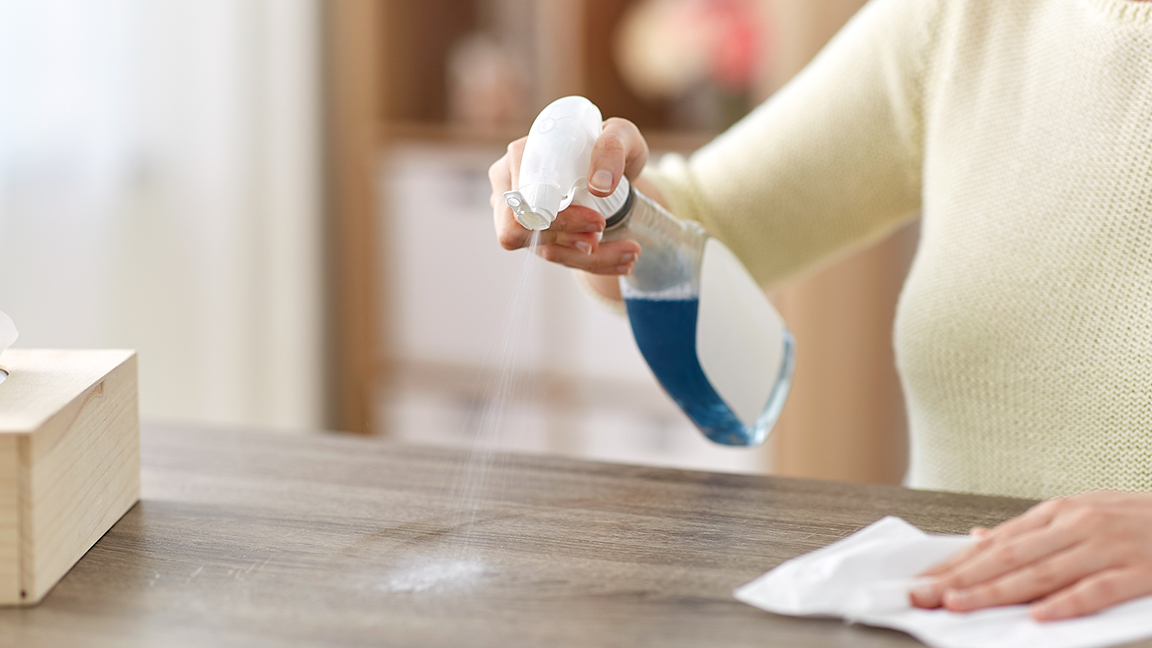
Spray bottle application. Dissolve the tablet in water, pour the solution into a clean spray bottle, and use it for targeted disinfection of high-touch surfaces. Door handles, light switches, tap handles, and remote controls all benefit from this method. It’s faster than wiping with a cloth and covers irregular surfaces more evenly.
Water-based applicators. Nano sprayers and mist sprayers used for surface disinfection in offices and larger spaces work well with the GERMISEP tablet solution. The full guide to using GERMISEP with water-based applicators covers the preparation steps and concentration guidelines for those devices.
Mopping floors. A tablet dissolved in a mop bucket produces a floor disinfectant that covers large surface areas without the harsh residue of undiluted bleach. It’s particularly useful in kitchens and bathrooms where floor hygiene matters and bare feet are common.
Soaking cloths and sponges. Cleaning cloths themselves accumulate bacteria rapidly. Soaking them in the prepared solution disinfects the cloth before use, reducing the risk of spreading pathogens from one surface to another.
The same WHO fact sheet on NaDCC confirms that the compound’s applications span water treatment, surface disinfection, and food industry sanitation, reflecting the same versatility that makes GERMISEP’s chlorine tablets useful across multiple household contexts. The WHO’s NaDCC chemical fact sheet documents its role as a stable chlorine source recognised for use across domestic and emergency settings globally.
Are GERMISEP Disinfectant Tablets For Water Right For Your Household?
Yes, for most households in Malaysia. If your current routine relies on liquid bleach diluted by guesswork or general-purpose sprays without a dedicated disinfection step, GERMISEP tablets produce a more reliable chlorine disinfectant from tap water with no special preparation. The tablet format is pH-neutral, skin-safe, glove-free, and produces a consistent concentration every time. It’s suited to families with young children and pets, to households where someone has a weakened immune system, and to anyone who wants hospital-grade disinfection without hospital-grade handling requirements.
Frequently Asked Questions
1. How much water do I use with one GERMISEP disinfectant tablet for water?
One GERMISEP tablet dissolved in two litres of tap water produces the standard concentration for general home surface disinfection. For higher-contamination applications like soaking mop heads or disinfecting buckets used in sick rooms, a different ratio may be required. Check the GERMISEP dosage calculator for application-specific guidance before adjusting.
2. Are GERMISEP chlorine tablets safe to use around children and pets?
Yes. GERMISEP tablets are hypoallergenic and pH-neutral. They don’t produce harsh fumes and don’t require protective gloves during normal application. The prepared solution is safe for surfaces in children’s play areas, pet-accessible spaces, and households with elderly members.
3. How do sanitizer tablets differ from liquid bleach in practice?
Sanitizer tablets in NaDCC form are more stable in storage, more precisely dosed, and produce a higher proportion of active HOCl at their working concentration than sodium hypochlorite. Liquid bleach degrades from the moment it’s opened and is more difficult to dilute accurately at home. For consistent daily disinfection, the tablet format is more reliable.
4. What happens if I use a solution that is older than 24 hours?
The free chlorine in the prepared solution dissipates as it reacts with organic matter and the environment. After 24 hours, the remaining concentration may be too low for reliable microbial kill. Using an old solution risks incomplete disinfection. Always prepare a fresh batch daily for any surface where hygiene is a priority.
The idea that hospital-grade disinfection requires special chemicals, protective equipment, or technical knowledge is outdated. A tap, two litres of water, and a GERMISEP tablet produce a proven chlorine disinfectant in under two minutes, with the same active ingredient that relief organisations trust in the field. The convenience is real, but so is the science behind it. For households that take surface hygiene seriously, the tablet format removes the inconsistency that liquid bleach introduces and replaces it with a process that works the same way every single time. To see the full GERMISEP product range, visit the GERMISEP products page and find the format suited to your cleaning needs.